Living and working in a busy city leaves little time for long training sessions. Many people believe that a good workout needs ninety minutes and a perfect plan, but research and experience show that short, focused sessions can build strength and fitness when they are done consistently. This guide shows how.
Set a realistic weekly schedule
Choose three or four sessions that you can actually keep, rather than six that you will skip by week two. Put them in your calendar like meetings, and choose times that fit your day, such as before work, at lunch or on the way home.
Consistency beats intensity, and a thirty minute workout done every week for a year is worth far more than a heroic month followed by months of nothing.
Use a simple full body structure
A strong routine can be built around five movement patterns: a squat, a hinge, a push, a pull and a carry or core exercise. Combine them in a single session, and you train most of your body in under forty minutes without needing complicated programs.
Examples include goblet squats, deadlifts with a light bar, push ups or a bench press, rows or pull downs, and planks or farmer carries.
Warm up with purpose
A warm up of five to eight minutes reduces injury risk and makes the first working set feel better. Use light cardio, joint circles and a few lighter repetitions of the first exercise instead of long static stretching, which is better after training.
Treat the warm up as part of the workout and not as an optional extra.
Choose the right weight
The correct load feels challenging in the last two or three repetitions while form stays clean. If you finish a set and could easily do five more, increase the weight slightly next time, and if your technique falls apart, reduce it.
Writing down your numbers in a notebook or app is the simplest way to see progress and to stay motivated.
Add short cardio blocks
Cardio does not need to be a separate hour. Ten to fifteen minutes of intervals on a bike, rower or treadmill after lifting, or a brisk walk between meetings, improves heart health and endurance and fits easily into a city lifestyle.
Take stairs, walk or cycle for part of your commute to add extra movement without extra time.
Use a trainer wisely
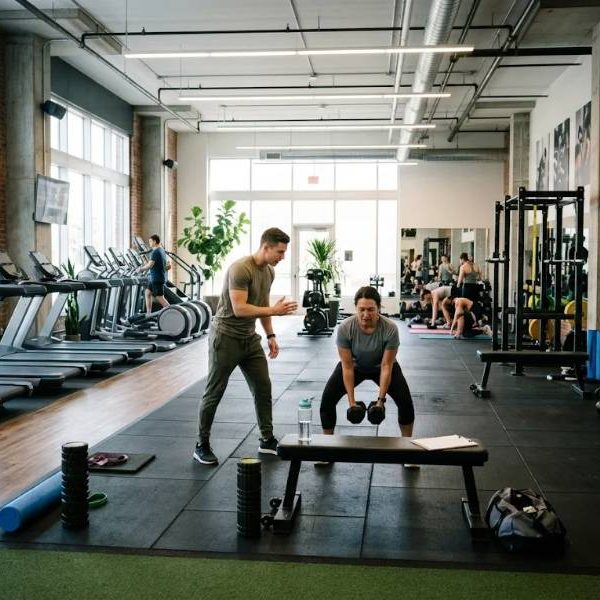
A personal trainer is most useful at the start, when technique and planning matter most. Ask for a program you can follow alone, learn how to adjust loads and request feedback on your form every few weeks.
Look for a trainer with recognized qualifications who listens to your goals, limits and schedule.
Respect recovery
Muscles grow and strength improves during rest, not during the workout itself. Aim for seven to nine hours of sleep, take at least one or two rest days per week and consider lighter sessions when you are very tired or stressed.
Official health guidance, such as the World Health Organization physical activity fact sheet, explains how much activity adults need for general health.
Eat to support training
You do not need a perfect diet to train well. Eat regular meals with protein, vegetables, whole grains and healthy fats, drink enough water and avoid long gaps before intense sessions, which can leave you light headed.
Specific nutrition needs vary by person, so speak with a qualified professional if you have health conditions or special goals.
Check the gym equipment
Machines and free weights should be stable, clean and in good condition. Look for damaged cables, loose pins or worn benches, report them to staff and avoid using anything that seems unsafe.
Safety information and labels on equipment matter, and our overview of GPSR translation requirements explains why product safety instructions must be available in local languages in the European market.
Learn gym etiquette
Wipe equipment after use, re rack your weights, let others work in between your sets when the gym is busy and avoid filming other people. These small habits make a shared space comfortable for everyone.
Respect personal space and keep conversations short during peak hours.
Serve a multilingual membership
City gyms attract members from many countries. Contracts, safety rules and class descriptions in the right language prevent misunderstandings and make newcomers feel welcome, especially in bilingual regions.
Fitness businesses in Canada often use French Canadian translation services to prepare membership agreements, signs and marketing in the local variety of French.
Train when you travel
Business trips do not have to break your routine. A hotel gym, a set of resistance bands or a simple bodyweight circuit of squats, push ups, lunges and planks takes twenty minutes and keeps the habit alive.
Pack a light band and a skipping rope for extra options.
Avoid common beginner mistakes
Doing too much too soon, copying advanced programs from social media and ignoring pain signals are the most frequent errors. Increase volume gradually, focus on technique and stop an exercise that causes sharp pain.
If pain persists, consult a doctor or a physiotherapist rather than pushing through.
Make training a long term habit
Choose activities you enjoy, find a training partner and track your progress in a simple way. Reward yourself for consistency, not only for results, and expect to adjust your plan as your life changes.
The best program is the one you can follow for years, and a busy city is full of places and people that can help you keep it going.